

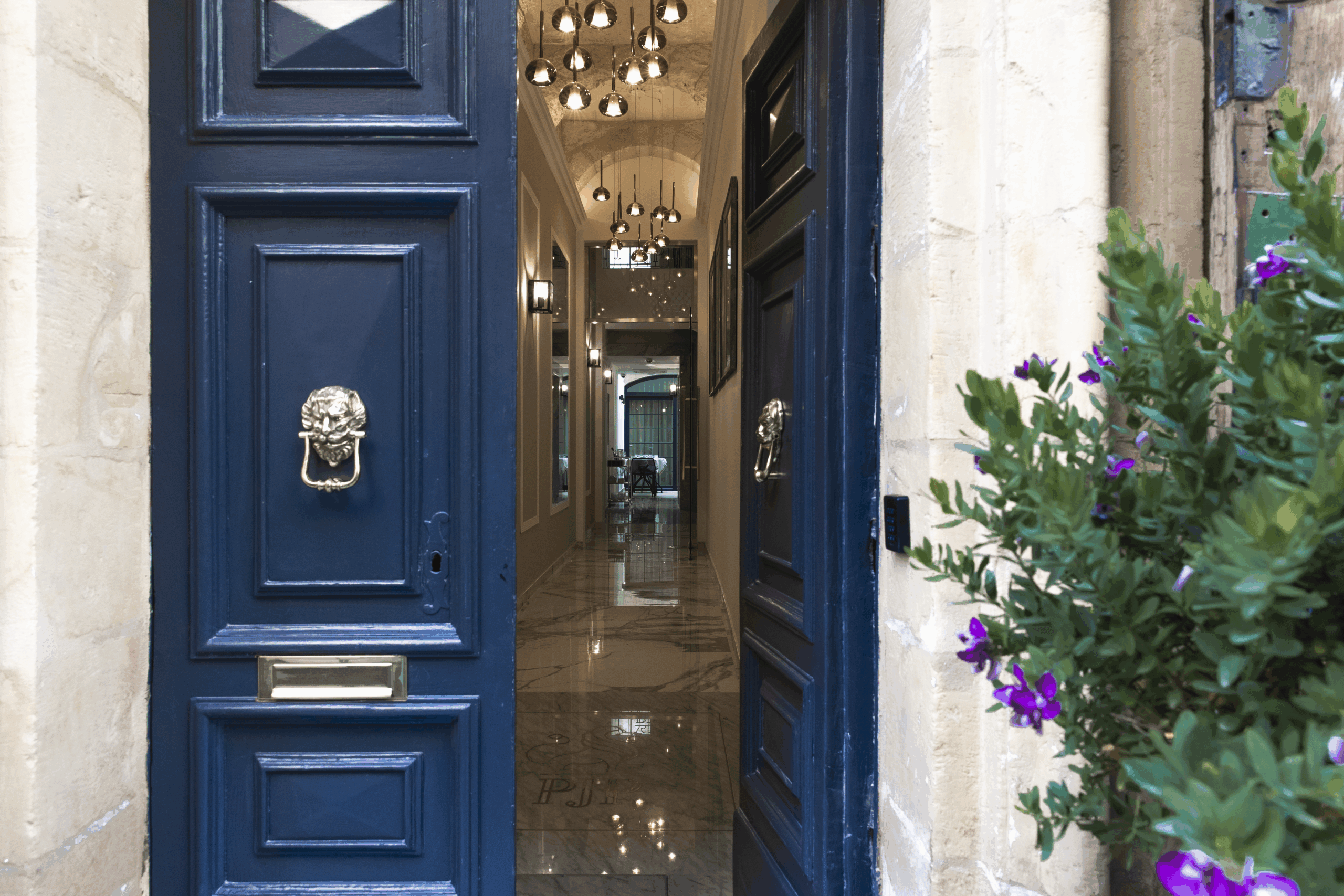
Why Maltese doors look the way they do: knockers, colors, symbolism, photo-walk route
If you have ever wandered through Valletta, Birgu, or the older streets of Sliema and felt compelled to stop every few steps for “just one more photo,” you were probably drawn in by more than balconies and golden limestone. In Malta, the doors themselves tell stories. They are not simply entrances to homes; they are declarations of identity, quiet symbols of protection, and small works of art set into stone.
A traditional Maltese door has a recognizable structure. Solid timber panels form the base, often painted in confident, saturated colours. Above, a fanlight allows air and daylight to filter inside—an architectural response to the island’s heat long before modern cooling systems. Surrounding each doorway, the limestone frame acts almost like a picture border, elevating even the simplest entrance into something composed and intentional. Carved details, metal studs, and discreet nameplates add layers of personality that hint at family histories and generations past.
Then there are the knockers. Before doorbells, these were the voice of the house. Some are understated rings; others are sculptural—lions, hands, fish, intricate motifs that feel almost theatrical. Historically, they signaled more than a visitor’s arrival. A heavy, well-crafted knocker implied stability and permanence. A more elaborate design suggested pride, prosperity, or a love of ornamentation. Even today, they carry a quiet authority, as if guarding the threshold between public street and private life.
Colour is perhaps what visitors remember most vividly. Deep blues and sea greens echo the surrounding Mediterranean, while bold reds and sunny yellows brighten narrow lanes. Beyond aesthetics, paint protects the wood from salt air and strong sun. Over time, this practical decision evolved into an informal competition of creativity. Walking down a Maltese street feels like moving through an open-air gallery where every doorway contributes to the rhythm and mood of the neighbourhood.
Look closer and you may notice small religious plaques, crosses, or images of saints fixed near the entrance. These subtle details speak to faith, protection, and tradition. Other carvings or motifs might reference maritime life or long-forgotten trades. You do not need to decipher every symbol; simply noticing them deepens the experience of wandering.
The best way to appreciate these doors is slowly. Begin in Valletta early in the morning, when the light is soft and shadows trace every carved edge. Drift through side streets rather than the busiest avenues. Later, cross the harbour to the Three Cities for a more residential feel and a slightly different palette. End the day near the Sliema promenade, where historic charm meets modern seaside calm.
After hours of door-spotting and unhurried exploration, returning to a comfortable base makes all the difference—especially when choosing where to stay in Malta. 1926 Le Soleil keeps you close to ferry routes, waterfront walks, and the island’s most photogenic corners. Book your room now, or contact us at [email protected] or +356 2133 3570 to begin your own story behind Malta’s most beautiful doors.