

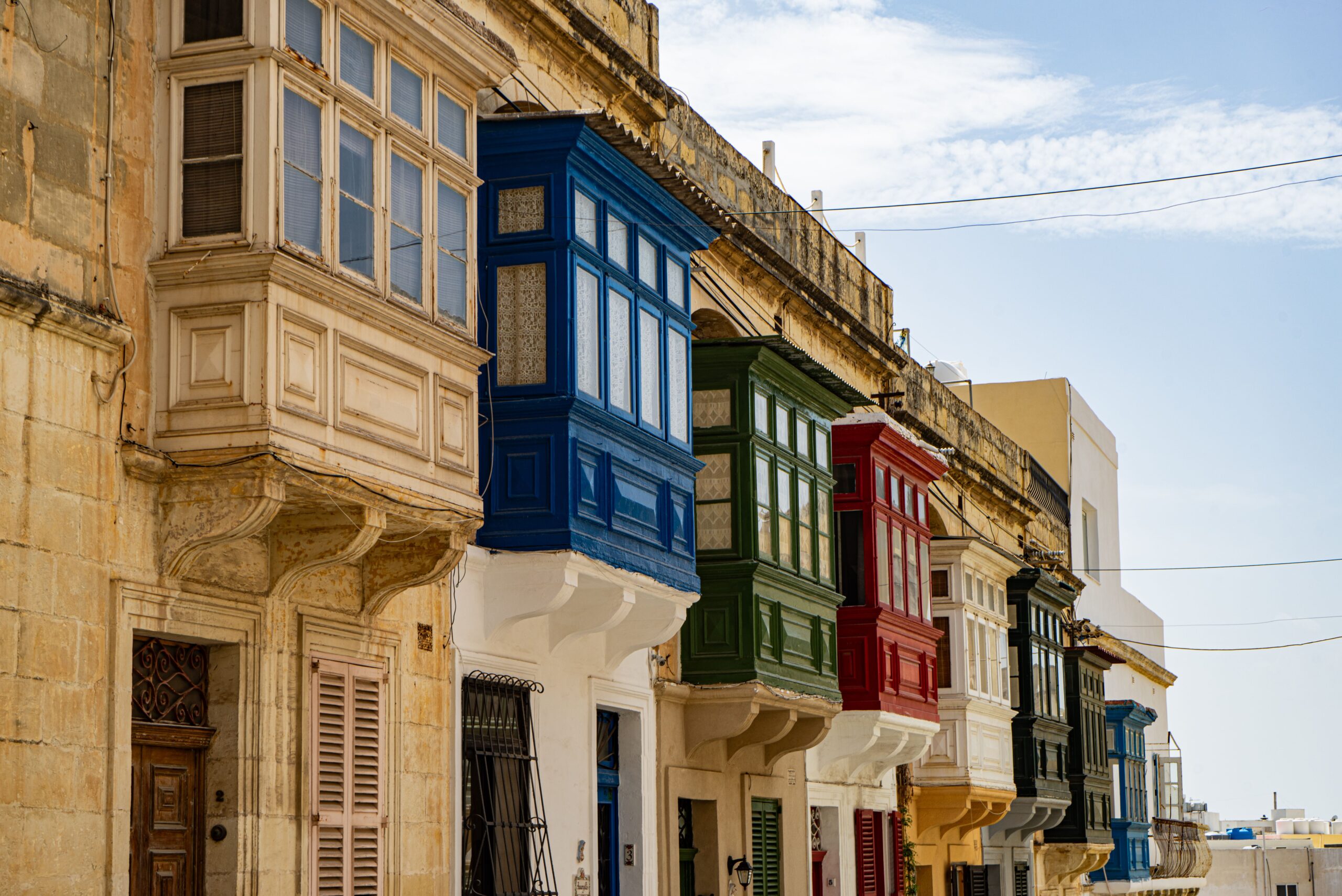
The story of Maltese balconies (gallarija) — origins, symbolism, where to see the most striking examples.
If you spend even a short time walking through Malta’s streets, one architectural detail quickly begins to stand out above everything else: the colorful enclosed balconies projecting from stone façades. Known locally as gallariji, Maltese balconies are far more than decorative features. They are symbols of identity, craftsmanship, and the layered cultural history that shaped the islands over centuries. Today, they remain one of the most recognizable elements of Malta’s urban landscape, blending practicality with unmistakable Mediterranean character.
The origins of the gallarija reflect Malta’s unique position between Europe, North Africa, and the Middle East. Historians often trace influences back to the traditional Arabic mashrabiya — enclosed wooden windows designed to provide airflow, shade, and privacy — combined with European architectural styles introduced during the periods of Spanish, Sicilian, and later British influence. Over time, Malta transformed these inspirations into something entirely its own.
Originally, balconies were not built simply for aesthetics. They served practical purposes in the island’s hot climate, allowing residents to observe street life while remaining protected from direct sunlight and strong winds. Before modern air conditioning, the enclosed structure helped circulate air through homes while maintaining privacy inside densely built cities. In many traditional neighborhoods, balconies became social observation points — places where daily life unfolded quietly above the streets below.
What makes Maltese balconies especially striking is their visual diversity. Some are painted in bold greens, blues, reds, or deep burgundy tones, while others preserve natural wood finishes or more muted colors that blend into the limestone surroundings. Their intricate details — carved supports, decorative panels, and shuttered windows — reflect generations of local craftsmanship. Even within the same street, no two balconies feel exactly alike.
Valletta is one of the best places to appreciate the architectural beauty of the gallarija. Walking through the capital’s narrow streets reveals entire rows of balconies stacked above limestone façades, creating dramatic lines of color and shadow. The Three Cities also offer exceptional examples, often in quieter residential settings where traditional Maltese life feels more visible and authentic. In Mdina, the island’s old capital, balconies appear more restrained and elegant, complementing the city’s aristocratic atmosphere and historic stone architecture.
One of the most fascinating aspects of the gallarija is how naturally it blends function and identity. These balconies are not museum pieces isolated from everyday life — they remain part of Malta’s living streetscape. Laundry still hangs nearby, windows open to conversations between neighbors, and sunlight continues to transform the wood and stone throughout the day.
Experiencing Malta means noticing these small architectural details that quietly tell the island’s story. At 1926 Le Soleil, you stay connected to the island’s rhythm, from seaside strolls to relaxed evenings along the Sliema promenade. Book your stay now or contact reservations@1926lesoleil.com or +356 2133 3570 for more information.